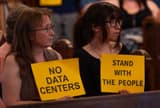
South Carolina S. 867, the 'Data Center Development Act', introduced January 29, 2026, is sponsored by Sens. Tom Davis (R-Beaufort, primary sponsor), Kimbrell, Garrett, Sutton, Walker, Blackmon, Turner, Zell, Kennedy, and Devine. The bill requires a state permit before a new data center can operate, and regulates permitted data centers on locations, water usage, infrastructure costs, and financial assurances. Sen. Davis described it as a 'middle ground' approach. Separately, H4583, the 'South Carolina Data Center Responsibility Act', is sponsored by Reps. April Cromer (R-Anderson), Gilreath, Oremus, Chumley, White, Reese, and Atkinson. Additional related bills include S. 724 (commercial data center water usage reporting) and S. 3401 (technology transparency). A gigawatt-scale data center proposal in the Lowcountry drew significant opposition from local residents and a bipartisan group of legislators representing Colleton County. VERIFIED 2026-05-26: Did not advance before South Carolina's regular session adjourned May 14, 2026 (carryover possible in the 2-year biennium). The SC Senate did pass budget provisos requiring annual data center water-use reporting ($10k/day penalty) and an economic-incentive moratorium.

Alabama Senate Bill 270 (Alabama Affordability Protection Act), sponsored by Sen. Lance Bell, requires the Public Service Commission to review contracts between utilities and data centers using 150+ MW to ensure costs are not passed to residential ratepayers. Requires data centers to pay full cost of grid infrastructure upgrades. Passed unanimously by both chambers (Senate 30-0, House 100-1). Governor Kay Ivey signed SB 270 into law on April 10, 2026. Senate concurred 33-0 after House amendments.
In New York State, New York, New York S.9144 (Senate, Sen. Liz Krueger, Co-prime sponsor Sen. Kristen Gonzalez) / A.10141 (Assembly, Asm. Anna Kelles), introduced February 6, 2026, would impose a moratorium of at least 3 years and 90 days on permits for new data centers designed to use 20+ MW. During the moratorium, the DEC must issue a generic environmental impact statement covering energy, water, air quality, GHG emissions, and e-waste; the PSC must assess rate impacts and protect residential customers from cost increases. Would not affect the public Empire AI research initiative in Buffalo. Described as the 'strongest-in-the-nation' data center moratorium. Additionally, S.6394 (the NY Sustainable Data Centers Act) requires data centers to source 1/3 renewable energy by 2030, 2/3 by 2035, and 100% by 2040. S.8540 (the AC/DC Act) addresses rate classification and cost responsibility for data center operators. Over 100 community, environmental, and faith organizations called for passage of S.9144/A.10141 in a March 2026 letter to Gov. Hochul. [Validation 2026-06-18: status updated to 'passed legislature, awaiting governor signature' per https://earthjustice.org/press/2026/nys-legislature-passes-data-center-moratorium.]
In Tucker County, West Virginia, Fundamental Data, a Virginia-based company, applied for an air permit for the 'Ridgeline Facility' — a natural gas power plant and data center campus between Thomas and Davis that could span 10,000 acres across Tucker and Grant counties (1.7GW). The West Virginia DEP issued an air quality permit authorizing construction of a 785MW natural-gas-fired power plant with diesel backup generators. In February 2026, the West Virginia Air Quality Board upheld the air permit, denying appeals from Tucker United, the West Virginia Highlands Conservancy, and the Sierra Club. The board sided with developers despite two days of testimony from citizen groups. Opposition groups argue the project threatens the area's tourism-based economy and rural character. A state law passed in 2025 stripped local authority over data center siting. On April 14, 2026, the West Virginia Highlands Conservancy issued a new action alert urging members to contact legislators and the WVDEP over the Fundamental Data LLC project, confirming the 1,656-MW gas-plant-plus-data-center near Thomas and Davis is still advancing. WV Commerce officials publicly clarified the project is proceeding. The West Virginia Air Quality Board ruled in favor of developers on February 7, 2026. UPDATE 2026-04-25: On April 21, 2026, the West Virginia Highlands Conservancy, Tucker United, and Sierra Club filed a motion in the WV Intermediate Court of Appeals seeking the recusal of Chief Judge Dan Greear from the Ridgeline air permit appeal. The motion cites Rule 2.11 of the WV Code of Judicial Conduct and alleges multiple conflicts: House Speaker Roger Hanshaw co-hosted Greear's campaign fundraisers, Greear's son worked at Bowles Rice (the firm representing Fundamental Data), and Hanshaw is a partner at Bowles Rice. A portion of the appeal had been dismissed earlier ahead of the evidentiary hearing. UPDATE 2026-07-23: The WV Dept. of Commerce demanded the developer disclose project details, then reversed itself, accepting the company's claim that the project is merely 'conceptual' and that it lacks legal control of the land — directly contradicting the WVDEP, which had already issued an air permit based on a finding that the company DID control the land. HB 2014's confidential-business-information exemption is shielding most of the underlying data from public disclosure.