 Amazon

CONFIRMEDDate confidence: CONFIRMEDStated as firmHow firmly the source words the date: confirmed, scheduled, estimated, delayed or unverified.Show all CONFIRMED pins81% CONFIDENCEOverall confidence: 81%How well the pin's source and references back up its dates.Weighted average of how firmly 6 references, the source included, support the pin's start and end times; a reference counts half as much for every 180 days older than the newestShow all pins at 75% confidence or better
Amazon's announcement, published September 21, 2026, says "Amazon is launching the Colorado River Basin Collaborative (CRBC) and plans to invest $20 million".[1]- Start
- Sep 21, 202690% CONFIDENCEsource
Amazon Commits $20M to Colorado River Water Conservation
Amazon pledges $20 million and launches the Colorado River Basin Collaborative, a corporate coalition with Aldi, The Coca-Cola Foundation, Ecolab and others that aims to raise $100 million for water projects across the basin in two years.
- Amazon is launching the Colorado River Basin Collaborative (CRBC) and plans to invest $20 million in water conservation in communities that rely on the Colorado River; the coalition's objective is to raise $100 million in two years[1]
- Participating companies have committed more than $32 million so far, including Amazon's $20 million; the others include Aldi, The Coca-Cola Foundation, Ecolab, EdgeConneX, Grundfos, Vantage and Xylem[1]
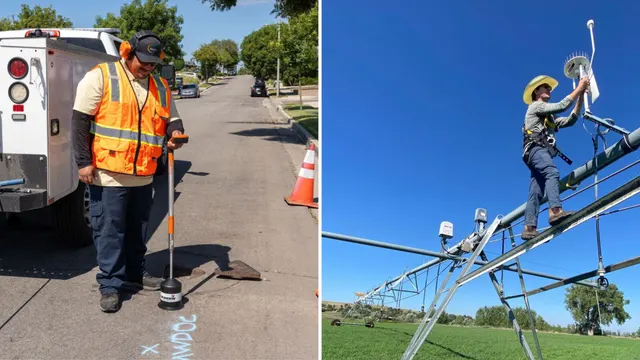
- Amazon is investing $2.2 million over three years with the Municipal Water District of Orange County on leak detection and repairs, expected to save more than 189 million gallons of water a year[1]
- A $2.4 million project with agricultural technology company Arable puts AWS-powered sensors on tribal farmland in the Lower Colorado River Basin so farmers draw less water from Lake Mead, saving about 238 million gallons a year[1]; Amazon declined to name the tribe in northern Arizona, citing ongoing negotiations[4]
- Rather than pooling money in one fund, each company contracts directly with vetted project teams; the Pacific Institute's Water Resilience Coalition runs the program day to day, deploying funding through 2028[1]
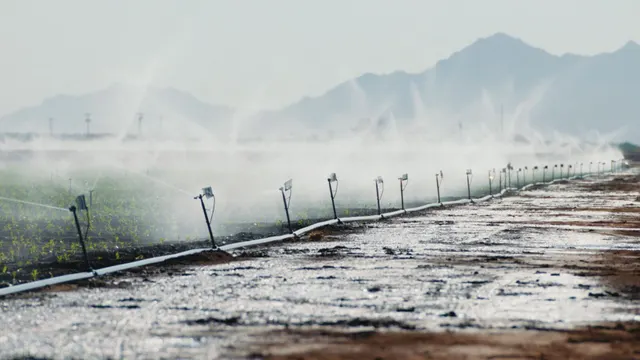
- The river serves 40 million people and 5.5 million acres of farmland across seven states and Mexico, and after 25 years of severe drought its largest reservoirs are below 30% capacity[1]
- Amazon water sustainability lead Will Hewes said the money "certainly isn't going to solve the whole problem" but is a larger scale than corporate water stewardship has seen before[4]
- Amazon said some projects would center on Southern Nevada but gave no details, and the Southern Nevada Water Authority said it had no sense of how the investment might involve the region[5]
- The announcement came nearly a month after Nevada said it plans to sue the Department of the Interior over water cuts[6]
- Both named projects are in Lower Basin states; Lake Powell fell in August to its lowest level since it began filling in 1963, and federal guidelines signed August 21 cut Lower Basin deliveries by 1.25 million acre-feet in each of the next two years[2]
- Pacific Institute senior fellow Michael Cohen said private funding can help expand efforts to cut water use as a hotter, drier climate strains supplies[3]
Cost $20M