
The city page lists daily hours except Thursday cleaning closures; the pool closes at or below 32F.[1]
A spring-fed, year-round swimming hole in Zilker Park that stays cool in summer and chilly in winter.
 Valkyrie Profile: Lenneth Launches on PSP in Japan8 views GamingTokyo
 Aston Martin Reveals the 665 PS Vantage Roadster, From GBP 175,00015 views+60% AutomotiveGaydon
 Live A Live HD-2D Remake Launches on Nintendo Switch6 views GamingTokyo
 Final Fantasy XI Launches on PlayStation 2 in Japan on 16 May 20026 views GamingTokyo
 BYD Launches the Seal 06 EV Sedan at the Chongqing Show From RMB 109,80010 views AutomotiveChongqing
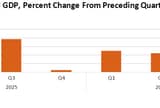 US GDP Grows 3.4% in Q3 2026 as Investment and Consumers Lift Output7 views+500% Economy
 Lartiste feat. Caroliina — "Mafiosa" (SNEP Top Singles (year-end) #1 2018)50 views+200% Music
 Vino Novello 2026 Goes on Sale in Italy on 30 October10 views+100% Food
 Curtiss-Wright Announces $30M Round Rock Nuclear-Sensor Expansion5 views LabourRound Rock
 Legacy of Kain: Defiance Launches on PS2, Xbox and Windows5 views GamingSan Carlos
 Star Ocean: The Second Story R Launches on Consoles and PC5 views GamingTokyo
 Nier Replicant ver.1.22474487139... Launches on PS4, Xbox One and PC5 views GamingTokyo
 TSMC Fab 22 in Kaohsiung: Five-Phase 2nm Megafab Under Construction at Nanzih SemiconductorsKaohsiung City
 TSMC's First Kumamoto Fab (JASM Fab 1) Is Built and Producing SemiconductorsKikuyo
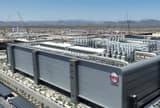 TSMC Arizona Fab 1: N4 Fab Built in Phoenix, in Volume Production Since Q4 2024 SemiconductorsPhoenix
 TSMC's Global Fab Buildout: Arizona, Kumamoto, Dresden, Kaohsiung and Taichung Semiconductors
 Tropical Cyclone Murasu peaks at 85 knots Disaster86.2
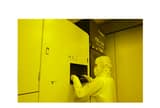 Canon Ships FPA-1200NZ2C Nanoimprint System to Texas Institute for Electronics SemiconductorsAustin
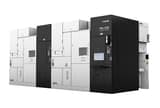 Canon FPA-1200NZ2C Nanoimprint Lithography System Launches Semiconductors
 How Many Fed Rate Cuts Will 2026 Bring? Polymarket Says ZeroLive market odds Economy
 Will the US-Iran Ceasefire Hold Through the Midterms?Live market odds Geopolitics
Virginia HB 897 requires data centers to use emission-free (non-diesel) backup generators and demonstrate commitment to clean energy to qualify for sales and use tax exemptions. The bill passed the House 61-34 and passed the full Senate, making Virginia one of the first states to condition data center tax incentives on environmental performance. Governor Spanberger signed HB 897 into law on April 9, 2026, alongside HB 284/SB 371 (voluntary demand flexibility programs for high-load customers using 25+ MW) and bills to aid low-income utility customers affected by data center energy demand.
WV House Bill 2014 (2025) created a certified microgrid program and set policies for data centers, stripping local government jurisdiction over 'high-impact' data centers (90+ MW) and diverting property tax revenue. In 2026, bills to restore local control (HB 5590, HB 5620) and require water usage disclosure were introduced but blocked. HB 4983 passed 78-16, bundling rulemaking to limit transparency. On April 1, 2026, West Virginia Watch published a call for a state moratorium, noting HB 2014 bans local governments from enforcing noise, pollution, zoning, lighting, viewshed, or land use rules against certified data center projects. Sen. Joey Garcia's bill to restore local control has not received a hearing. WV MetroNews published an April 7 analysis of the 'data center development dilemma.'






Multiple bills introduced in RI legislature. Rep. Brian Patrick Kennedy's bill would require data centers with 50+ MW demand to cover all electricity infrastructure costs. Three bills introduced in the General Assembly, though lawmakers still debating how to even define 'data center.' Tax incentive proposals also under debate.
Georgia SB34 would have prohibited data center fuel generation and transmission costs from being included in residential electricity rates, requiring commercial data centers to cover all increased fuel, power, and transmission system upgrade costs. The bill emerged after the Public Service Commission authorized Georgia Power to expand production by nearly 10 GW — mostly for data centers — including new methane-burning facilities. The Senate avoided a final vote after a last-minute alternative measure based on House Bill 1063 appeared to have the votes to pass.


 Berkshire Hathaway


 BYD Company


