

The 2034 Winter Olympics, officially the XXVII Olympic Winter Games, and branded as Utah 2034, is a future international multi-sport event scheduled to take place in the U.S. state of Utah from February 10 to 26, 2034. The pin sits at Rice–Eccles Stadium.
Filters All
TrendingLast 3 days
 Comcast Files WARN Notices for Nearly 1,000 Layoffs Across Four States11 views LabourPhiladelphia
 TSMC Fab 22 in Kaohsiung: Five-Phase 2nm Megafab Under Construction at Nanzih9 views SemiconductorsKaohsiung City
 TSMC's Global Fab Buildout: Arizona, Kumamoto, Dresden, Kaohsiung and Taichung10 views+800% Semiconductors
 Taft Energy Storage: 200 MW / 800 MWh Battery in Uxbridge, Worcester County, Massachusetts34 views+350% EnergyUxbridge
 October CPI Lands November 10, With Kalshi Pricing a 0.3% Headline Monthly Band8 views EconomyWashington
- WTI Crude Oil Price — August 2026 Settles at US$85.768 views Energy
 Canon Ships FPA-1200NZ2C Nanoimprint System to Texas Institute for Electronics9 views SemiconductorsAustin
 Brent Crude Oil Settlement — October 2026: $112.35/bbl35 views Energy
 Helix Electric Breaks Ground on $45.3 Million Alabama Fabrication Campus14 views+700% InfrastructureHollywood
 Will the US-Iran Ceasefire Hold Through the Midterms?10 views+300% Geopolitics
 Canva Announces an IPO12 views+300% FinanceSydney
 Project Bluestem: Proposed Cloverleaf Data Center Campus32 views+33% ComputingBasehor
New pinsLatest
 Google Announces TPU 8i for Low-Latency AI Inference SemiconductorsMountain View
 Google Announces TPU 8t for Frontier AI Training SemiconductorsMountain View
 Google Unveils Ironwood, Its Seventh-Generation TPU SemiconductorsMountain View
 Google Unveils Trillium, Its Sixth-Generation TPU SemiconductorsMountain View
 Google Announces TPU v5p and the AI Hypercomputer SemiconductorsMountain View
 Google Introduces TPU v5e for Cost-Efficient AI Training and Inference SemiconductorsMountain View
 Google Announces TPU v4, Scaling AI Pods Beyond One Exaflop SemiconductorsMountain View
 Google Introduces TPU v3 With Liquid-Cooled AI Supercomputing SemiconductorsMountain View
 Google Announces TPU v2 and Cloud TPU Training Pods SemiconductorsMountain View
 Google Reveals TPU v1, Its First Custom AI Inference Chip SemiconductorsMountain View
 Nvidia Unveils Groq 3 LPX Inference Racks at GTC 2026
 Nvidia Licenses Groq Inference Technology and Hires Its Leadership
Sponsored
East Ennedi, Chad
NASA's[1][2][3] eclipse catalogue gives the instant of greatest eclipse as 10:17:25 UT on 2034-03-20 (10:18:45 TD, the two separated by delta-T), from Saros series 130. Eclipse circumstances are computed from orbital mechanics, so the date and time are exact centuries ahead.
The Moon's shadow touches down at 10:17:25 UT on 2034-03-20, and the total phase lasts up to 4 minutes 9 seconds along a path 159.1 km wide crossing Nigeria, Cameroon, Chad, Sudan, Egypt, Saudi Arabia, Iran, Afghanistan, Pakistan, India and China. A partial eclipse is visible from Africa, Europe and western Asia.
Nagoya, Japan
Date has moved, per en.wikipedia.org[1]: "…suke Niwa said that due to construction delays a 2027 opening was now impossible and it is not expec…"
A 505 km/h superconducting maglev intended to link Tokyo and Nagoya in 40 minutes, delayed by a water-diversion dispute in Shizuoka. Estimated date.
≈$60B
Estimated: Google Project Springboard Campus Building 4, John T. Griffin Industrial Park, Muskogee, Muskogee County, OK 74403Google LLC (Alphabet Inc.)


Separate construction cost, IT power, floor area and an opening date for this building or phase have not been verified. Published campus figures do not establish independent component figures.


Given as a target, not a fixed date, per the pin description: "…roduce ten times the power it consumes. Estimated date.…"
The world's largest tokamak, built by 35 nations in southern France, aims to show fusion can produce ten times the power it consumes. Estimated date.
≈$23.9B
Peru
NASA's[1][2][3] eclipse catalogue gives the instant of greatest eclipse as 16:18:07 UT on 2034-09-12 (16:19:27 TD, the two separated by delta-T), from Saros series 135. Eclipse circumstances are computed from orbital mechanics, so the date and time are exact centuries ahead.
The Moon's shadow touches down at 16:18:07 UT on 2034-09-12, and the annular phase lasts up to 2 minutes 58 seconds along a path 102.1 km wide crossing Chile, Bolivia, Argentina, Paraguay and Brazil. A partial eclipse is visible from Central America and South America.

No new completion date has been given: the Public Investment Fund suspended work on 16 September 2025, and Semafor[2] reported on 22 May 2026 that further work is delayed until at least after 2030, with no timetable for the redesign or new funding. The pin uses the last reported aim, completing the first half-mile section in 2034 (per the Wall Street Journal via Wikipedia[1]), which predates the suspension and is itself doubtful.
The first 2.4 km of a proposed 170 km linear city of mirrored walls, scaled back sharply from original announcements and on hold since September 2025, with further work pushed past 2030. Estimated date.
$8.8T


ITER's[1] updated 2024 baseline gives 2034 for the start of research activities. Only the year is stated, so the pin takes its last day.
ITER's 2024 baseline puts the start of research operations in 2034, opening a period of hydrogen and deuterium plasma experiments at the fusion reactor in southern France.


August 25, 2026 reporting citing CDA’s August 21 bond prospectus places the Global Terminal in 2034 and southern Concourse E around 2034. Retains December 31, 2034 as an estimated terminal-program year anchor, not an exact opening day or guarantee for every optional/later scope. Concourse D is separately targeted for late 2028.[1]
Chicago's O'Hare 21 terminal overhaul, including a new Global Terminal, has pushed its completion years past its original target as costs climbed.
$12.5B


Date has moved, per the source[1]: ITER "will start scientific operation in 2034," after the original plan "envisaged first plasma as early as 2025."
ITER, the largest and most powerful nuclear fusion reactor ever attempted, built in southern France by 35 partner nations, has pushed its first scientific operations back to 2034 after years of delays.
Brenner Pass, Austria
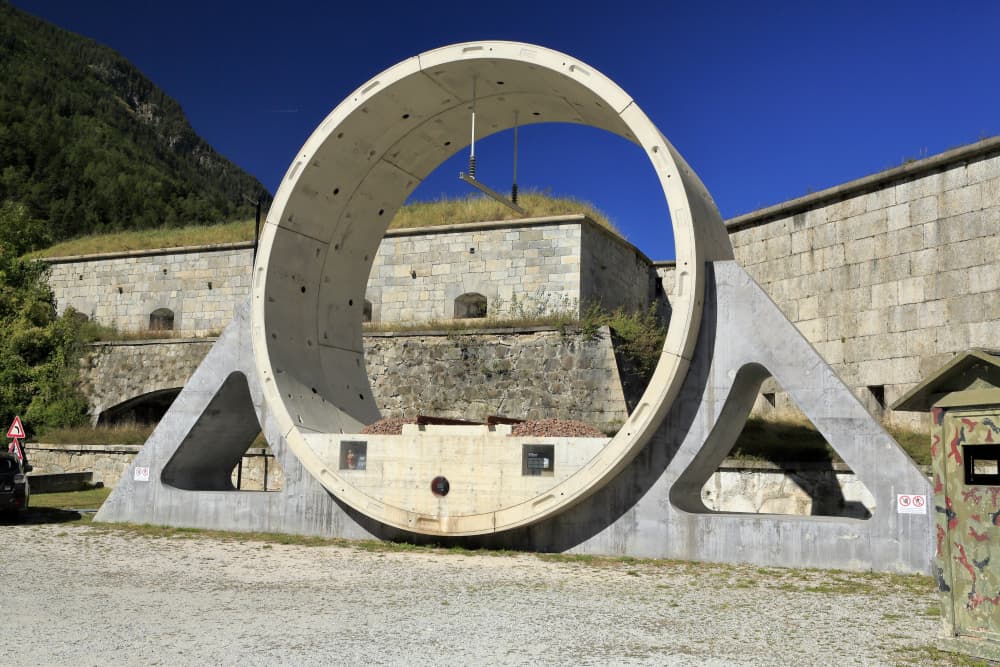
BBT SE[2][3] revised regular train service to 2034 on October 20–21, 2026. December 31 is a year-precision timeline anchor; no exact opening day is published.
At 55 km, with the Innsbruck bypass it forms the world's longest underground rail link, boring beneath the Alps between Austria and Italy. Estimated date.
≈$12.7B

Estimated: World Nuclear News[1], 17 April 2026: "construction of Thorizon One, a 100 MWe first commercial molten salt reactor in Zeeland by 2034". A year-level target, so 31 December 2034 is a timeline anchor.
A Dutch roadmap targets a non-nuclear test facility by 2027, the Thorizon Pioneer demonstrator at Petten by 2028 and the 100 MWe Thorizon One in Zeeland by 2034.
Point of greatest eclipse at sea, off New Zealand
NASA's[1][2][3][4] eclipse catalogue gives the instant of greatest eclipse as 23:04:32 UT on 2035-03-09 (23:05:53 TD, the two separated by delta-T), from Saros series 140. Eclipse circumstances are computed from orbital mechanics, so the date and time are exact centuries ahead.
Greatest eclipse falls at 23:04:32 UT on 2035-03-09, where the annular phase lasts 48 seconds on a path 31.5 km wide; annularity is longest at the sunrise end of the track, where it runs 1 minute 26 seconds. The path of annularity crosses New Zealand and the Pacific, and a partial eclipse is visible from Australia, New Zealand, the South Pacific, Mexico and Antarctica.
Manhattan, New York
Given as a target, not a fixed date, per the pin description: "…ottleneck on the US Northeast Corridor. Estimated date.…"
New rail tunnels under the Hudson plus rehabilitation of the 1910 North River Tunnels, the most critical bottleneck on the US Northeast Corridor. Estimated date.
$16.3B
 EDF

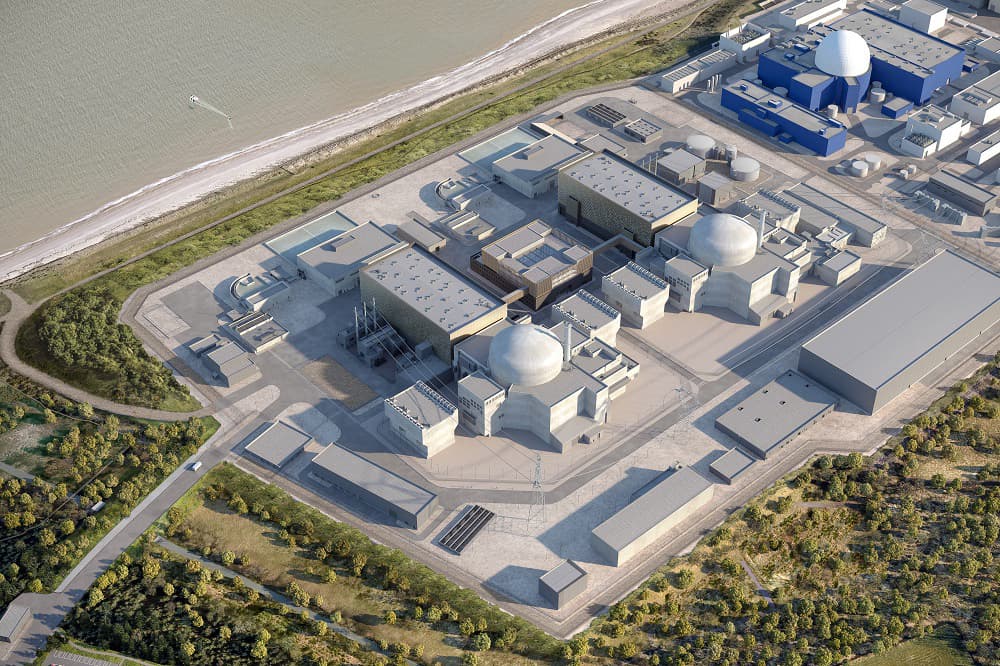
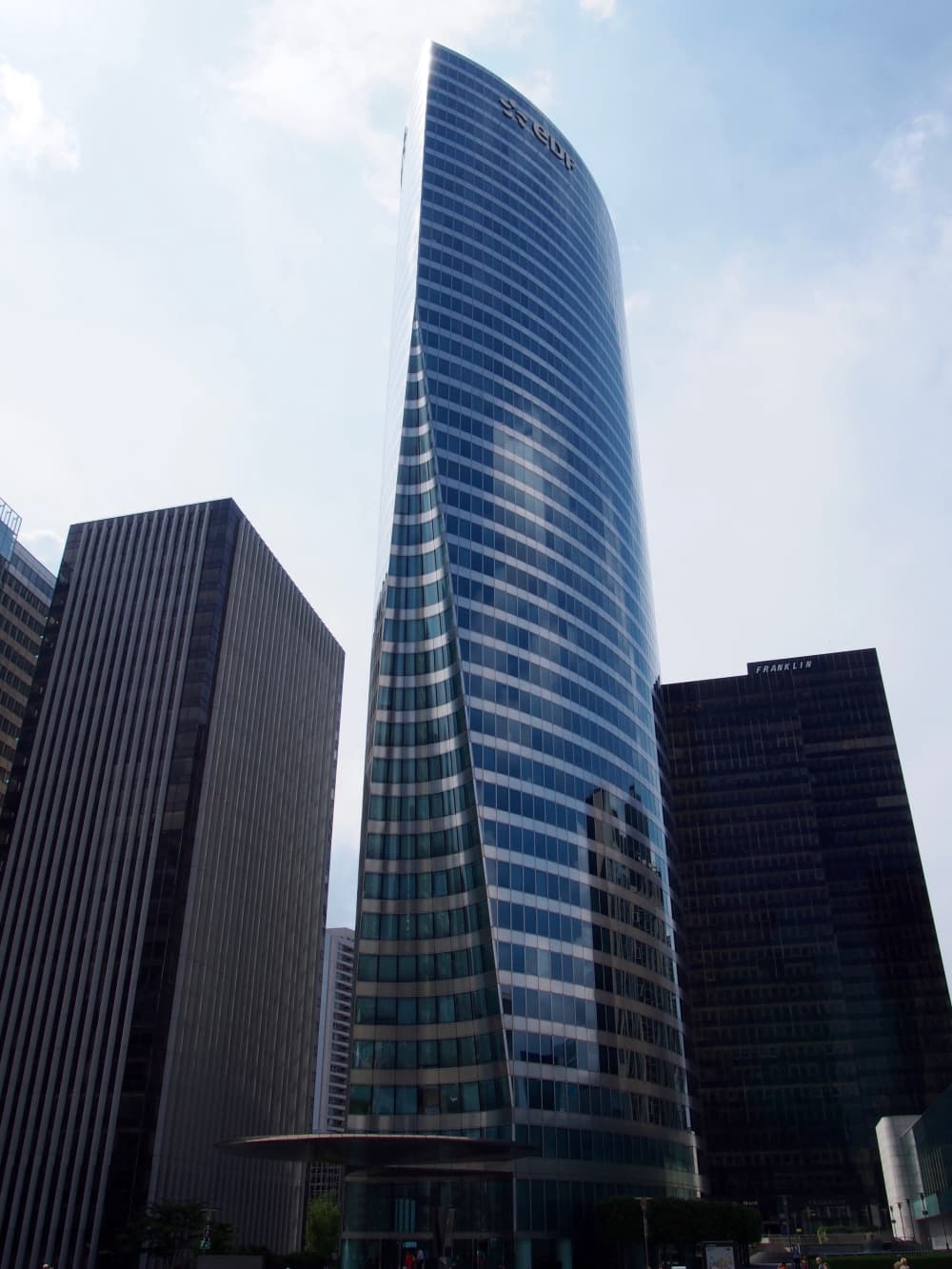
Given as a target, not a fixed date, per the pin description: "…C intended to power six million homes. Estimated date.…"
Britain's second new-build nuclear station, a near-copy of Hinkley Point C intended to power six million homes. Estimated date.
≈$48.7B
Point of greatest eclipse at sea, off China
NASA's[1][2][3] eclipse catalogue gives the instant of greatest eclipse as 01:55:25 UT on 2035-09-02 (01:56:46 TD, the two separated by delta-T), from Saros series 145. Eclipse circumstances are computed from orbital mechanics, so the date and time are exact centuries ahead.
The Moon's shadow touches down at 01:55:25 UT on 2035-09-02, and the total phase lasts up to 2 minutes 54 seconds along a path 116.3 km wide crossing China, Korea, Japan and the Pacific. A partial eclipse is visible from eastern Asia and the Pacific.
Melbourne, Victoria, Australia
Given as scheduled, per the source[1]: Stage One "will cost an estimated $33BN and will be finished by 2035," a target that depends on continued state funding for a multi-decade build.
Victoria's Suburban Rail Loop, announced in 2018 as a 90km orbital line built to connect Melbourne's suburbs without funnelling every trip through downtown, is aiming to open its first 26km stage in 2035. The state costs its first two stages at AUD $31-58BN; Victoria's Parliamentary Budget Office put the build at $125BN.
Estimated: Land between U.S. Highway 27 and Magnolia Street near Early County Airport, Blakely, Early County, Georgia 39823, United States (approximate: airport location) QTS


AJC[3] (13 March 2026): the developer estimates the full multiphase project will finish by the end of 2035; QTS's own page gives no start date and says timing depends on zoning, permitting and utility agreements.
QTS's planned Blakely campus in Early County, Georgia has a potential gross capacity of 1,400 MW across up to nine buildings and 12 million sq ft, to be built in phases to the end of 2035; no investment figure has been published and no tenant is named.


Given as scheduled, per the source[1]: Sound Transit "pushed back the opening of its West Seattle Link Extension from 2032 to 2035."
Sound Transit pushed back the opening of the West Seattle Link light rail extension, one flagship piece of its $54BN Sound Transit 3 build-out.
$54B

Estimated: SINAP Director Dai Zhimin said the next step is to "complete a 100 MWt thorium-based molten salt reactor demonstration project" and achieve "demonstration applications by 2035" (World Nuclear News[1]). No construction start or site is stated, so 31 December 2035 anchors the year.
After TMSR-LF1, SINAP plans to complete a 100 MWt thorium-based molten salt reactor demonstration project, with demonstration applications by 2035.

A target, per the source[1]: consent is only aimed for "before 2030", after which "a third runway would then open by 2035".
Heathrow Airport has set out a £49BN expansion plan, including a long-sought third runway and a new terminal complex, and has approved work on a planning application after decades of UK government indecision.
≈$62.8B

JR Central said in 2024 that 2027 was impossible and that the line would not open before 2034; in 2025 that slipped again to no earlier than 2035, which is what Wikipedia's[2] infobox now gives (citing Asahi Shimbun, 29 October 2025). Dated to the last day of 2035, the earliest year now stated.
JR Central's Chuo Shinkansen maglev line, meant to cut Tokyo-Nagoya travel to around 40 minutes, has slipped from a planned 2027 opening to no earlier than 2035.
$64B

TJPA's[1] project page gives an "anticipated revenue service date of 2035, funding dependent", a year rather than a day, so it sits at the end of that year.
The Portal takes Caltrain, and later California High-Speed Rail, underground from Fourth and King into the train box already built beneath the Salesforce Transit Center, with a new underground station at Fourth and Townsend. TJPA's July 2025 indicative estimate put the capital cost at about $7.57 billion, of which the federal government has pledged $3.38 billion.
$7.6B


Given as a target, not a fixed date, per the pin description: "…after cancellations and cost overruns. Estimated date.…"
Britain's second high-speed line, cut back to a single Phase 1 route after cancellations and cost overruns. Estimated date.
≈$122.1B
 City of Cape Town


Tygerburger, 9 Sep 2026: the plant is "expected around 2036" after a delay of about five years, per the City's Water Outlook tabled 21 Aug 2026; GroundUp[3] (31 Aug 2026) says the New Water Programme is fully operational by 2036 at best. The pin takes 30 June 2036, the close of financial year 2035/36.
Cape Town's permanent 50 to 70 million litre a day desalination plant lost its Paarden Eiland site to Transnet's port expansion, and the City's August 2026 Water Outlook now puts its new-water programme at 2036, about five years later than first water planned for 2030/31.

The article gives the phase as "Targeted for completion in 2037" with no month, so the pin uses the first day of that year.[1]
VTA's Phase II extension carries BART on from Berryessa through a five-mile single-bore tunnel to three new subway stations in San Jose - 28th Street/Little Portugal, Downtown San Jose and Diridon - plus a surface station at Santa Clara. Excavation of the tunnel boring machine entrance pit at Newhall Yard was in progress in late 2025.
$12.7B
Queensland, Australia
NASA's[1][2][3] eclipse catalogue gives the instant of greatest eclipse as 02:39:13 UT on 2037-07-13 (02:40:35 TD, the two separated by delta-T), from Saros series 127. Eclipse circumstances are computed from orbital mechanics, so the date and time are exact centuries ahead.
The Moon's shadow touches down at 02:39:13 UT on 2037-07-13, and the total phase lasts up to 3 minutes 58 seconds along a path 200.7 km wide crossing Australia and New Zealand. A partial eclipse is visible from the East Indies, Australia and the Pacific.
Point of greatest eclipse at sea, off Cuba
NASA's[1][2][3] eclipse catalogue gives the instant of greatest eclipse as 13:45:47 UT on 2038-01-05 (13:47:10 TD, the two separated by delta-T), from Saros series 132. Eclipse circumstances are computed from orbital mechanics, so the date and time are exact centuries ahead.
The Moon's shadow touches down at 13:45:47 UT on 2038-01-05, and the annular phase lasts up to 3 minutes 19 seconds along a path 107.2 km wide crossing Cuba, Dom.Rep., Cote d'Ivoire, Ghana, Niger, Chad and Egypt. A partial eclipse is visible from eastern North America, northern South America, the Atlantic, Africa and Europe.
Point of greatest eclipse at sea, off Colombia
NASA's[1][2][3] eclipse catalogue gives the instant of greatest eclipse as 13:31:31 UT on 2038-07-02 (13:32:54 TD, the two separated by delta-T), from Saros series 137. Eclipse circumstances are computed from orbital mechanics, so the date and time are exact centuries ahead.
The Moon's shadow touches down at 13:31:31 UT on 2038-07-02, and the annular phase lasts up to 0 minutes 60 seconds along a path 31.2 km wide crossing Colombia, Venezuela, Mauritania, Morocco, Mali, Niger, Chad, Sudan, Ethiopia and Kenya. A partial eclipse is visible from N. & Central America, South America, Africa, Europe and the Middle East.
Point of greatest eclipse at sea, off Australia
NASA's[1][2][3] eclipse catalogue gives the instant of greatest eclipse as 00:58:46 UT on 2038-12-26 (01:00:10 TD, the two separated by delta-T), from Saros series 142. Eclipse circumstances are computed from orbital mechanics, so the date and time are exact centuries ahead.
The Moon's shadow touches down at 00:58:46 UT on 2038-12-26, and the total phase lasts up to 2 minutes 18 seconds along a path 95.3 km wide crossing Australia, New Zealand and the South Pacific. A partial eclipse is visible from southeastern Asia, the East Indies, Australia, New Zealand, the South Pacific and Antarctica.